No additional tax burden on the public as government makes tax structure fairer, minister says
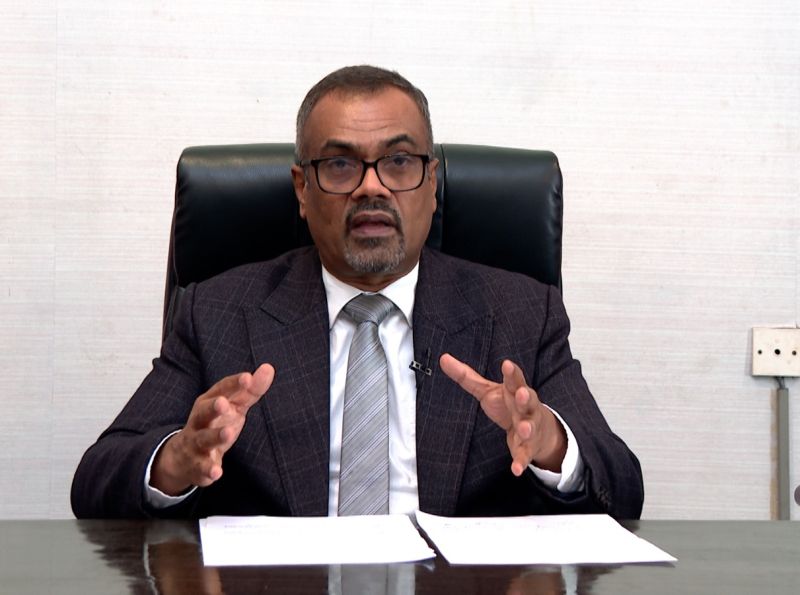
The Government has not placed an extra tax burden on the public and has instead moved to correct shortcomings in the existing tax structure so that it is fairer, more systematic and efficient, Minister of Labour and Deputy Minister of Finance and Planning Dr. Anil Jayantha Fernando has said.
He made the remarks today (04) while giving a detailed clarification on various tax-related issues. Responding to social media claims that the Government had arbitrarily increased various taxes, he described those claims as misleading. He reiterated that, as stated by the President, the Government has not imposed an additional tax burden on the public.
Tax revenue is the primary source of funding for maintaining essential government services, education, healthcare, development activities and infrastructure facilities, Dr. Fernando explained. Over the past two years, he said, the Government has taken measures to improve tax collection efficiency, tax administration and public compliance with tax obligations. The tax base has expanded as a result, enabling the Government to collect more tax revenue in 2025 than originally anticipated.
Addressing claims that a new 6% tax increase had been imposed on alcohol, cigarettes and tobacco products, the Minister said the January 2025 adjustment to excise duties on selected products was not a newly introduced tax but a revision under the existing indexation mechanism. Under that mechanism, tax rates on selected products, including alcohol, cigarettes, tobacco and electronic goods, are adjusted by adding 4% to the average inflation rate of the preceding year. A 6% adjustment was therefore made in January 2025 on the basis of inflationary conditions in 2024. He pointed out that a 14% adjustment had been implemented under the same mechanism in 2024 during the administration of former President Ranil Wickremesinghe. Portraying that established mechanism as a newly introduced tax increase by the present Government was misleading, he said. Taking into consideration the economic impact of Cyclone Ditwah in 2026, the Government decided not to implement the relevant tax adjustment, using the flexibility available under the existing formula, he added.
Clarifying allegations of an increase in customs duties on electric vehicles, Dr. Fernando said the changes were part of a reform of the existing tax structure rather than the imposition of an additional tax. The revisions were intended to ensure fairness in the application of tax principles, address weaknesses in the existing tax structure and minimise revenue losses.
He said pressure on the foreign exchange market and increased demand for US dollars arising from the conflict in the Middle East had created a need to manage import expenditure. Instead of restricting all imports, the Government introduced a 50% surcharge on customs duties applicable to private vehicle imports as a short-term measure to manage foreign exchange outflows. He emphasised that the objective was not to increase tax revenue but to safeguard the country's foreign exchange reserves while preventing disruptions to economic activities and shortages of essential goods.
Responding to concerns over the rise in withholding tax on interest income from 5% to 10%, the Minister said the revised arrangement had provided relief to individuals who are not liable to pay income tax. Under the previous system, 5% was deducted from interest income even from individuals who were not liable to pay income tax, and many did not pursue the refund process, resulting in an unfair situation. Under the revised system, individuals who are not liable to pay income tax can obtain an exemption from the deduction by submitting the required declaration or affidavit confirming their tax-exempt status. For individuals who are liable to pay income tax, the 10% deducted at source can be credited against their annual tax liability when the final tax assessment is calculated. The change in the withholding tax rate does not necessarily result in an increase in their final tax burden, he explained.
Commenting on the increase in the tax rate on profits earned by companies in the alcohol and tobacco industries from 40% to 45%, the Deputy Minister said those industries have a relatively higher capacity to generate profits and that the Government had taken steps to obtain a greater tax contribution from these sectors. Imposing higher taxes on such industries, internationally referred to as 'sin industries', was a means of ensuring a fairer contribution without placing an unnecessary tax burden on the general public, he noted.
Addressing criticism of the taxation of individuals and companies engaged in service exports, he explained that certain parties involved in service exports had previously enjoyed tax exemptions under the former tax laws. That had created an imbalance, as exporters of goods and businesses providing services within the country were required to pay taxes while certain service exporters enjoyed tax concessions. Service exporters have been brought within the tax framework to address that disparity. Instead of the 30% tax rate proposed by the previous Government, a rate of 15% has been introduced for companies. For individuals, the maximum tax rate applicable to income earned from service exports has been capped at 15%. Otherwise, depending on the applicable income tax thresholds, such income could have been subject to rates of up to 36%. He emphasised that the measure was intended to correct an existing distortion in the tax system while introducing a more favourable tax rate for the parties concerned.
Clarifying the introduction of VAT on services supplied through digital platforms, the Deputy Minister said the objective was not to impose a special tax on digital technology but to bring service providers operating through digital platforms within the existing VAT framework. Citing transportation and food delivery services provided through digital applications, he said those companies essentially provide the same services as businesses operating through conventional methods, which are already subject to VAT. Service providers should not be exempted from the tax system simply because their services are delivered through digital platforms. The amendment was introduced to ensure an equal tax base for all service providers, he added.
Addressing reports that VAT on financial services had been increased to 20.5%, he said the measure was intended to simplify tax calculation and collection rather than impose an additional tax burden. Financial services were previously subject to VAT at 18% and the Social Security Contribution Levy (SSCL) at 2.5%, collected separately. Although both taxes were calculated on the same tax base, separate documentation and administrative procedures had to be maintained. The combined rate of 20.5%, representing the total of the two existing taxes, is now collected through a single mechanism, he explained.
Concluding, the Deputy Minister emphasised that changes in tax rates alone should not be considered when determining whether the overall tax burden has increased. Attention should also be given to fairness in the tax system, adherence to policy principles, proper utilisation of tax revenue and measures to prevent waste, fraud and corruption. He further stated that despite the ongoing conflict in the Middle East, the country had been able to maintain an uninterrupted supply of essential commodities, including fuel, fertiliser and medicines, through the economic management measures implemented by the Government. He reiterated that the Government remains committed to generating revenue through a fair tax system to ensure the uninterrupted provision of essential public services and the continuation of development activities, while ensuring that public funds are properly utilised without waste, fraud or corruption.
Comments (0)
- No comments yet - be the first.