Government to keep strong state presence in energy sector, President says
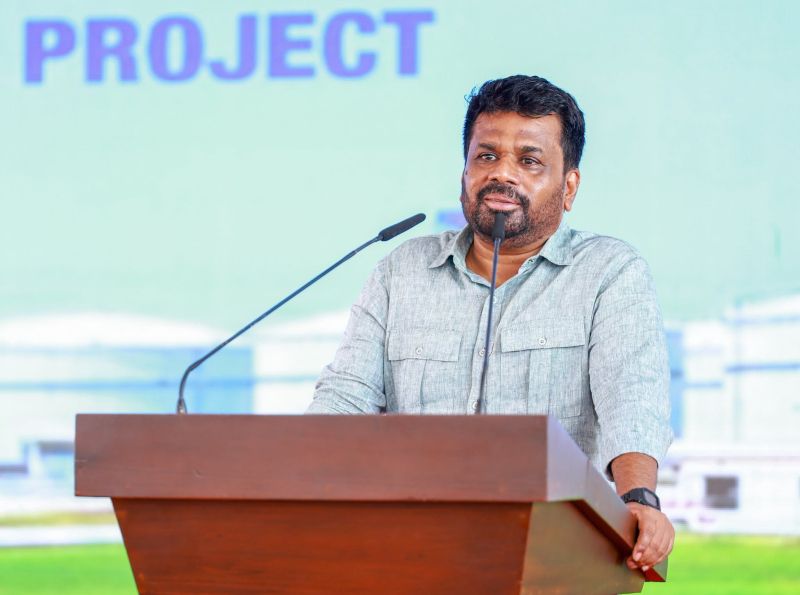
President Anura Kumara Dissanayake said the Government is committed to maintaining a strong state presence in the energy sector while improving the efficiency of state institutions and ensuring reliable services for the public.
The President made the remarks yesterday (02) while attending the commencement of construction of the Jet A-1 fuel pipeline system of the Ceylon Petroleum Corporation (CPC) and two new oil storage tank systems belonging to CPC and the Ceylon Petroleum Storage Terminal Limited (CPSTL).
Sri Lanka’s energy sector requires a well-planned and advanced agenda, President Dissanayake said, noting that state institutions in the sector had in the past faced financial difficulties and a lack of public confidence. He said CPC had accumulated debts amounting to Rs. 840 billion, creating significant pressure on the state banking system, a situation that had contributed to calls for the sale and privatisation of state institutions.
Although Sri Lanka has a relatively small energy market, the Government believes it should retain a leading role because of the sector’s importance to the country’s economy and social life, he said. Continued state involvement, he stressed, must be supported by improved efficiency and the services the public expects.
The President said the Government has ended the previous practice of recruiting employees to state institutions based on political requirements and that current recruitment has been limited to essential personnel required for specific projects.
He said CPC recorded a profit of Rs. 36 billion last year, while CPSTL recorded a profit of Rs. 3.5 billion. CPC has recorded a profit of Rs. 28 billion so far this year, he added.
President Dissanayake identified national energy security as the next major challenge, noting that existing fuel storage capacity is sufficient for only around 23 to 25 days. He said projects are now being implemented to expand pipeline systems, reduce fuel unloading times and increase storage capacity to at least 45 days. A new tank system with a capacity of 104,000 cubic metres has already commenced.
He also highlighted the impact of international developments on domestic fuel prices, saying the price of refined diesel in the global market had increased from US$80 to US$170 per barrel, while petrol prices had risen from US$70 to US$136.
The Government had decided to share the impact of increased global fuel prices among consumers, suppliers and the Treasury rather than transferring the entire burden to the public, he said. Accordingly, the Treasury provided a fuel subsidy of Rs. 60 billion for five months from April, covering Rs. 100 per litre of diesel and Rs. 20 per litre of petrol.
Following another increase in global fuel prices in September, the Government increased the domestic price of diesel by Rs. 10 from 1 October, while the Treasury bears the remaining Rs. 70 of the increase that would have been required under the pricing formula. The President said the Treasury has allocated a further Rs. 41 billion for fuel subsidies for October, November and December.
He emphasised that CPC and CPSTL should not sell fuel below cost and that any difference arising from a Government decision to maintain prices below cost should be borne by the Treasury.
President Dissanayake also said fuel supplied to ships and aircraft generates foreign exchange for the country, noting that US$384 million had been earned so far this year from supplying fuel to aircraft. He further announced that an US$800 million project is scheduled to commence in November to increase passenger-handling capacity at Katunayake Airport by a further 10 million passengers, in addition to its existing capacity of 11 million.
The newly commenced Jet A-1 pipeline project would enable fuel to be supplied directly through a pipeline instead of bowsers, he said.
The President also noted that the existing general fuel subsidy has resulted in higher fuel-consuming vehicle owners receiving a greater benefit. Accordingly, discussions will be held next week with the Ministry of Digital Economy to develop a digital mechanism to target fuel subsidies towards sectors with genuine requirements, including public transport, agricultural machinery, fishing vessels and lorries transporting vegetables.
He expressed his appreciation to the CPC and CPSTL chairmen, boards of directors, management and employees for their contribution and called on all stakeholders to work together to build a more efficient and sustainable energy sector.
Comments (0)
- No comments yet - be the first.